.png?width=300&height=118&name=Stacked%20Dark%20Blue%20(3).png "Stacked Dark Blue (3)")
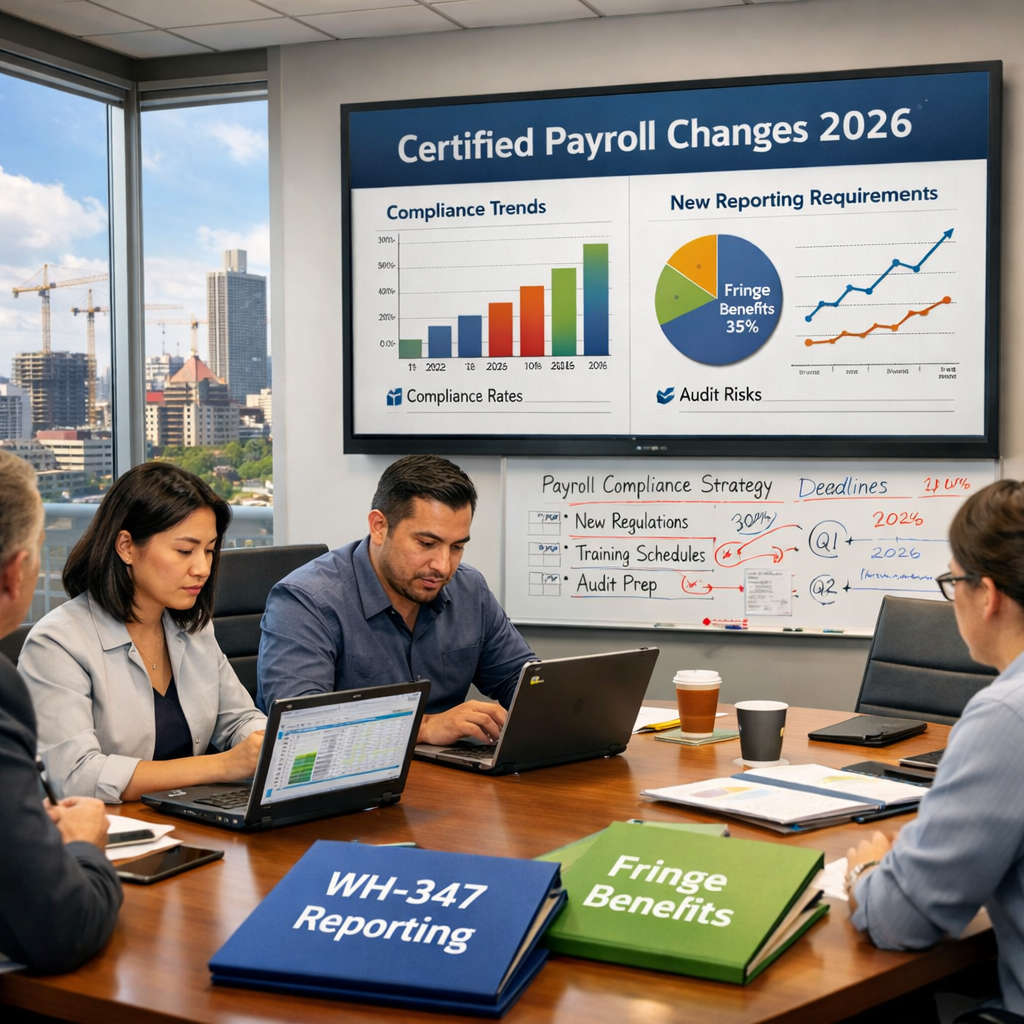
Certified Payroll Changes in 2026: What Contractors Need to Know
The construction industry is facing major certified payroll changes in 2026, and contractors cannot afford to fall behind. Whether you manage federal projects, public works jobs, or state prevailing wage contracts, staying compliant is essential to getting paid on time, avoiding penalties, and keeping projects on track.
Certified payroll is more than paperwork. Errors in reporting can delay funding, trigger audits, create back-pay liability, and put future contracts at risk. That is why many contractors are seeking trusted payroll services, Albany, NY businesses can rely on for certified payroll accuracy and compliance support.
Why Certified Payroll Compliance Matters in 2026
In 2026, certified payroll requirements are expected to become more detailed, more digital, and more closely enforced. Contractors need to be prepared for updated forms, stronger electronic submission requirements, closer review of apprentice ratios, and stricter fringe benefit reporting.
Failing to adapt can lead to:
- Payment delays
- Wage and hour audits
- Penalties and back-pay claims
- Increased administrative burden
- Risk to future public project eligibility
For construction companies, proactive compliance is far less expensive than fixing payroll mistakes after the fact.
1. Updated WH-347 Reporting Requirements
Form WH-347 remains the foundation of certified payroll reporting for Davis-Bacon and many prevailing wage projects. Contractors should expect continued scrutiny around how employee wages, classifications, hours, and fringe benefits are reported.
A compliant WH-347 process should clearly document:
- Worker classifications
- Daily and weekly hours
- Straight-time and overtime pay
- Fringe benefit amounts
- Deductions
- Apprentice information
- Statement of compliance
Even a small reporting error can create larger issues if wage rates, classifications, or benefits are not supported by documentation.
2. Electronic Certified Payroll Submission Is Now Essential
More agencies are requiring contractors to move away from paper submissions and toward digital filing. Electronic certified payroll reporting helps agencies review information faster, but it also means contractors need stronger internal processes.
To stay prepared, contractors should have systems in place for:
- Weekly payroll collection
- Digital submission workflows
- Electronic approvals and signatures
- Organized backup documentation
- Secure record retention
If payroll data is incomplete or delayed, certified payroll filing can quickly become a project bottleneck.
3. Apprentice Ratio Compliance Requires Careful Tracking
Apprentice compliance is one of the most common trouble spots in certified payroll. Contractors must make sure apprentices are properly registered and used according to approved program ratios.
This means contractors should:
- Confirm each apprentice is enrolled in an approved program
- Track apprentice-to-journeyworker ratios on each project
- Maintain registration and program documentation
- Apply the correct wage rate when ratios are exceeded
If an apprentice does not qualify under the applicable rules, the contractor may be required to pay the full journeyworker rate, resulting in costly corrections.
4. Fringe Benefit Reporting Must Be Accurate
Fringe benefits are a critical part of certified payroll compliance. Contractors need to clearly show whether fringe obligations are being met through cash wages, bona fide benefit plans, or a combination of both.
Common reporting issues include:
- Failing to distinguish cash fringe from plan contributions
- Reporting unsupported fringe amounts
- Misallocating fringe by project or classification
- Misunderstanding what qualifies as a bona fide plan
Poor fringe reporting can lead to underpayment findings, audits, and back-pay liability.
5. Digital Record-Keeping Is No Longer Optional
Good certified payroll compliance depends on more than filing forms. Contractors also need to maintain complete records that support every payroll submission.
These records should include:
- Payroll registers
- Certified payroll reports
- Timecards and job allocations
- Apprentice documentation
- Benefit plan details
- Proof of fringe contributions
- Wage determinations
- Signed compliance statements
During an audit or investigation, incomplete records can quickly make a manageable issue much worse.
6. Construction Payroll Software Must Support Compliance
Not all payroll systems are built for contractors. Certified payroll requires more than standard paycheck processing. Construction firms need payroll tools that can manage multiple rates, prevailing wage classifications, fringe allocations, and project-based reporting.
A strong system should be able to:
- Generate certified payroll reports
- Track prevailing wage classifications
- Separate cash and plan fringe
- Handle apprentices and journeyworkers
- Support digital submissions
- Retain records for audits
If your current software has not been reviewed recently, now is the time to assess whether it is still meeting your compliance needs.
7. Your Team Needs Certified Payroll Training
Certified payroll accuracy does not depend on payroll staff alone. Project managers, HR personnel, field supervisors, and accounting teams all play a role in collecting and reporting labor data correctly.
Training should include:
- Proper job classification practices
- Weekly time and labor tracking
- Apprentice compliance rules
- Fringe benefit reporting
- Submission timelines
- Error correction procedures
The more consistent your team is, the lower your risk of payroll mistakes.
Common Certified Payroll Mistakes Contractors Should Avoid
Many certified payroll issues come from the same avoidable errors. Contractors should watch for:
- Misclassified workers
- Incorrect wage determinations
- Missing apprentice paperwork
- Inaccurate fringe reporting
- Late filings
- Incomplete job records
- Manual spreadsheet errors
- Weak internal review processes
Avoiding these mistakes starts with using a repeatable process and working with professionals who understand construction payroll compliance.
Why Contractors Are Outsourcing Certified Payroll
As compliance requirements grow, more construction businesses are choosing to outsource certified payroll. A specialized payroll partner can help reduce administrative strain, improve reporting accuracy, and lower compliance risk.
That is why contractors often search for:
- payroll services, Albany, NY
- PEO, Saratoga Springs
- Glens Falls payroll company
- Capital Region HR outsourcing
These searches reflect a growing need for partners who can handle payroll, compliance, HR support, and construction-specific reporting challenges.
Some companies may prefer a standalone certified payroll provider, while others may explore broader support models such as a PEO, Saratoga Springs businesses can use to combine payroll, HR administration, benefits support, and compliance services. Others may be looking for a dependable Glens Falls payroll company with local expertise and strong construction payroll knowledge. For firms that want broader back-office efficiency, Capital Region HR outsourcing can be a smart long-term strategy.
How TBM Payroll Helps Contractors Stay Compliant
At TBM Payroll, we help contractors navigate the complexity of certified payroll with practical, construction-focused support.
Our services include:
- Certified payroll reporting for federal and state projects
- Davis-Bacon and prevailing wage support
- WH-347 reporting assistance
- Fringe benefit reporting support
- Apprentice compliance tracking
- Electronic submission support
- Payroll process guidance for contractors and subcontractors
Whether your company is searching for payroll services in the Northeast or specifically, Albany, NY, evaluating a PEO for their business in Saratoga Springs, comparing a Glens Falls payroll company, or considering Capital Region HR outsourcing, TBM Payroll provides the expertise construction businesses need.
Bottom Line
Certified payroll changes in 2026 are increasing compliance demands for contractors across the construction industry. Businesses that prepare now will be in a much stronger position to avoid penalties, reduce delays, and protect profitability on public works and prevailing wage jobs.
Review your payroll systems, strengthen your reporting process, organize your records, and make sure your team is trained. The sooner you address certified payroll compliance, the easier it will be to stay ahead.
FAQ: Certified Payroll Changes in 2026
Frequently asked questions about certified payroll help contractors better understand compliance requirements while also improving search visibility for this topic.
What is certified payroll?
Certified payroll is a weekly payroll report required for many government-funded and prevailing wage construction projects. It shows that workers were paid the correct wages, fringe benefits, and classifications required by law.
Who needs certified payroll reporting?
Contractors and subcontractors working on federal, state, or public works construction projects often need certified payroll reporting. This is especially common on jobs governed by Davis-Bacon or state prevailing wage laws.
What is Form WH-347?
Form WH-347 is the standard payroll form commonly used for certified payroll reporting on federal projects. It includes employee information, hours worked, wage rates, deductions, fringe benefits, and a statement of compliance.
Why is certified payroll important for contractors?
Certified payroll helps contractors prove compliance with wage laws on public works projects. Accurate reporting helps avoid penalties, payment delays, audits, back-pay claims, and contract issues.
What are the biggest certified payroll compliance risks?
The most common risks include worker misclassification, incorrect wage rates, late submissions, apprentice ratio violations, inaccurate fringe benefit reporting, and missing supporting documentation.
How often do certified payroll reports need to be filed?
Certified payroll reports are typically filed weekly for covered projects. Contractors should confirm the exact reporting schedule and submission requirements for each federal, state, or local project.
What are fringe benefits in certified payroll?
Fringe benefits are the benefit amounts required in addition to base hourly wages under prevailing wage laws. These may be paid as cash in lieu of benefits or contributed to bona fide benefit plans such as health insurance, retirement plans, or approved training funds.
What happens if a contractor files certified payroll incorrectly?
Incorrect certified payroll can lead to audits, withheld payments, penalties, back wages, and possible contract complications. Repeated errors may also damage a contractor’s standing on future public works opportunities.
Why do contractors outsource certified payroll?
Many contractors outsource certified payroll to save time, reduce compliance risk, improve reporting accuracy, and ensure prevailing wage requirements are handled correctly. This is why many businesses search for payroll services, Albany, NY, a PEO, Saratoga Springs, a Glens Falls payroll company, or Capital Region HR outsourcing support.
What should contractors look for in a certified payroll provider?
Contractors should look for a payroll provider with experience in certified payroll, Davis-Bacon compliance, prevailing wage reporting, fringe benefit tracking, apprentice compliance, and electronic payroll submission support.
Need help with certified payroll compliance? TBM Payroll supports contractors with certified payroll reporting, prevailing wage compliance, and payroll services throughout Albany, Saratoga Springs, Glens Falls, and the Capital Region.
Need Help With Certified Payroll?
TBM Payroll specializes in certified payroll and construction compliance support for contractors throughout the Capital Region and beyond.
If you need help with certified payroll reporting, prevailing wage compliance, or a trusted partner for payroll services, Albany, NY contractors can count on, TBM Payroll is ready to help.
Don’t risk penalties or project delays. Let TBM Payroll handle your certified payroll so you can focus on building.
tbmpayroll.com
Leave Your Comment Here