.png?width=300&height=118&name=Stacked%20Dark%20Blue%20(3).png "Stacked Dark Blue (3)")

Navigating payroll compliance for adjunct faculty under New Document 148 is a crucial mandate for all educational institutions and small businesses seeking to maintain regulatory excellence nationwide. New Document 148 stands as a definitive regulatory framework, rigorously outlining compliance standards specifically tailored to adjunct faculty payroll and employment conditions. This framework sets the highest benchmarks for equitable treatment and transparent compensation practices—cornerstones of organizational integrity and operational excellence.
This authoritative guide delves into the critical compliance requirements codified within New Document 148 and illuminates key facets of payroll processing that guarantee flawless legal alignment and operational efficiency. We also dissect the impactful role of Local Law 144, a landmark New York City legislation designed to elevate payroll transparency for adjunct faculty. Notably, its principles have set a national precedent, influencing institutions well beyond New York by defining exemplary compliance standards.
In today’s dynamically evolving legal terrain across states, possessing a profound mastery of these requirements empowers institutions and businesses to effectively mitigate high-stake risks associated with non-compliance and to adeptly adapt ahead of regulatory changes. This article comprehensively covers paramount topics such as explicit compliance mandates, the transformative influence of local laws, and the strategic advantages of Professional Employer Organization (PEO) services provided by TBM Payroll. These services are industry-leading solutions that significantly streamline payroll and HR management nationwide. Furthermore, we explore best-in-class practices for ensuring impeccable payroll accuracy and spotlight cutting-edge technological advancements that fortify efficiency for small businesses and educational entities alike.
What are the key compliance requirements for adjunct faculty payroll under New Document 148?
Strict compliance with New Document 148 guarantees that adjunct faculty receive not only equitable treatment but exacting, legally compliant compensation aligned with federal and state employment laws. This entails full observance of the Fair Labor Standards Act (FLSA), including precise enforcement of minimum wage thresholds, overtime entitlements, and vigilant adherence to varied state-specific statutes governing payment frameworks and work hours. Institutions bear the unambiguous responsibility to maintain meticulously accurate records of hours worked and to ensure prompt, transparent payroll processing—pillars of robust compliance management.
Non-compliance invites severe repercussions, including substantial financial penalties and intensified legal scrutiny, which can severely jeopardize institutional reputation and financial integrity. Hence, proactive and rigorous compliance isn’t merely an operational necessity but a fundamental risk management imperative.
Addressing equitable compensation for all faculty, particularly adjuncts, remains a pivotal issue within higher education, echoing wider commitments to workplace equity across industries.
Gender Pay Gaps and Inequity Among Contingent Faculty in Universities
This section critically examines entrenched gender pay disparities prevalent in university contexts, highlighting decisive indicators of wage inequity for female faculty: their marked overrepresentation in part-time roles and disproportionately high engagement in contingent positions. The analysis is grounded in the 2024 study "Fighting institutional betrayal: Gender pay equity litigation against university employers," underscoring an urgent call for systemic reform.
How does Local Law 144 impact adjunct faculty payroll processing, and what is its broader significance?
Local Law 144 represents a cornerstone of payroll transparency enacted by New York City, mandating unequivocal disclosure of pay rates and total compensation details to adjunct faculty by educational institutions and employers. Though jurisdictionally bound to New York City, this law serves as a seminal model, promulgating enhanced labor transparency and fairness nationwide.
Institutions and businesses throughout the United States embrace Local Law 144’s ethos to refine their payroll infrastructures and foster transparent communication regarding adjunct faculty compensation. For entities operating within or connected to New York, strict adherence is compulsory, with non-compliance resulting in significant financial penalties and irrevocable reputational damage. Developing rigorous payroll systems aligned with these stringent regulatory and ethical standards is imperative to forestall operational disruptions and uphold stakeholder trust.
For comprehensive expert guidance about this pivotal regulation and its implications, consult this authoritative resource on payroll compliance and Local Law 144.
What payroll tax and reporting obligations must small businesses nationwide follow?
Across the United States, small businesses operate under a complex spectrum of payroll tax obligations encompassing federal income tax withholding, Social Security and Medicare contributions (FICA), federal unemployment tax (FUTA), alongside diverse state-specific payroll taxes and unemployment insurance mandates. Full compliance mandates scrupulous calculation, precise withholding, and punctual remittance of these taxes, coupled with exacting reporting protocols to federal and state authorities.
Instituting a well-defined payroll schedule and a methodical reporting framework is indispensable for unwavering compliance and the avoidance of costly penalties or governmental audits. Given the variability of these mandates by state, businesses and institutions must maintain vigilant, real-time awareness of all applicable laws across their operational geographies.
How do PEO payroll solutions offered by TBM Payroll simplify compliance and HR management for small to mid-sized businesses and institutions?
TBM Payroll’s Professional Employer Organization (PEO) services constitute a best-in-class, end-to-end solution for payroll and HR management, meticulously tailored for the specific complexities faced by small to mid-sized businesses and educational institutions throughout the United States. Through this proven PEO model, TBM Payroll assumes full responsibility for payroll processing, tax filings, compliance oversight, and comprehensive HR administrative functions, deploying a team of seasoned experts.
This strategic partnership alleviates the substantial administrative and regulatory burden on organizations, delivering unparalleled assurance regarding adherence to evolving employment statutes and intricate legal landscapes. By leveraging integrated, state-of-the-art solutions, TBM Payroll enables organizations to sustain rigorous compliance, minimize risk exposures, and channel focus decisively towards their core strategic missions.
|
Entity |
Feature |
Benefit |
|
PEO Services |
Comprehensive HR Management |
Significantly reduces administrative burden and guarantees full compliance |
|
Payroll Processing |
Automated Tax Filings |
Minimizes errors and ensures streamlined, error-free compliance |
|
Risk Management |
Compliance Monitoring |
Proactively protects businesses from costly legal complications |
This table underscores how TBM Payroll’s PEO services intricately integrate critical operational features that optimize institutional and business workflows while steadfastly upholding rigorous regulatory standards nationwide.
What are the benefits of outsourcing payroll and HR integration with TBM Payroll's PEO services?
Outsourcing payroll and HR functions to TBM Payroll’s expert PEO services confers significant strategic advantages for institutions and businesses operating across various sectors and states. Through this alliance, organizations access advanced payroll technologies that dramatically elevate processing speed, accuracy, and operational efficiency.
Moreover, outsourcing through TBM Payroll offers superior mitigation of compliance risks amidst continually shifting regulatory frameworks and jurisdictional complexities. This approach empowers organizations to strategically redeploy internal human and financial resources toward mission-critical objectives, all while substantially curtailing operational expenditures and legal liabilities related to payroll management.
How does TBM Payroll ensure risk reduction and regulatory adherence through PEO services?
TBM Payroll delivers specialized payroll processing and PEO services expressly designed to support small to mid-sized businesses and educational institutions in mastering their HR functions with precision and reliability. The company maintains an unwavering commitment to continuous, real-time monitoring of federal, state, and local regulatory developments to guarantee client compliance at every level.
This proactive, adaptive methodology equips organizations to expertly navigate complex employment regulations, substantially minimizing exposure to penalties, audits, and disputes. TBM Payroll’s dedication to regulatory compliance and operational excellence is a cornerstone for client growth, reducing administrative overhead and safeguarding against costly legal exposure.
Which payroll technologies and processes enhance efficiency for educational institutions and SMEs nationwide?
Innovations in payroll technology are transformative for operational efficiency among educational institutions and small to mid-sized enterprises (SMEs) nationwide. Leading-edge cloud-based payroll platforms provide instantaneous access to payroll data, streamlined employee record management, and advanced security measures for safeguarding sensitive information.
These technologies automate compliance reporting, substantially reduce human error, and liberate administrative staff to concentrate on strategic priorities. Adoption of these sophisticated technological solutions enables organizations to sustain competitive advantage while rigorously adhering to multifaceted regulatory frameworks.
How does HR management integration streamline payroll for adjunct faculty across various jurisdictions?
Integrating robust HR management systems with payroll platforms offers a unified, authoritative solution for adjunct faculty payroll processing, comprehensive employment recordkeeping, and stringent compliance verification. This integration promotes flawless communication regarding hours worked, exact compensation calculations, and expeditious compliance audits, ultimately producing a trusted and efficient payroll ecosystem.
Employing such consolidated systems enables institutions and businesses to swiftly resolve discrepancies, maintain audit-ready documentation, and consistently comply with varying employment regulations across different states and municipalities.
What are best practices for payroll accuracy and compliance tracking for institutions and businesses?
Adhering to best practices for payroll accuracy demands conducting systematic and frequent audits of payroll data, preserving exhaustive documentation for any payroll modifications, and maintaining transparent, ongoing communication with employees. Organizations must diligently track hours worked, actively solicit employee feedback to resolve issues promptly, and invest in continual training for payroll personnel regarding the latest regulatory changes.
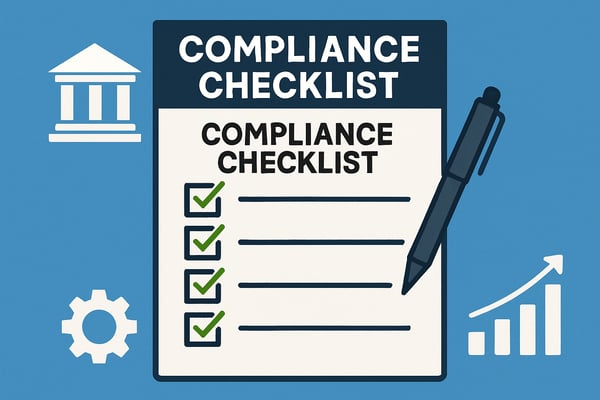
Additionally, implementing a comprehensive compliance checklist across the payroll lifecycle is essential to thoroughly meet all legal requirements, markedly reducing exposure to risks stemming from non-compliance.
What essential HR and payroll support services enable institutions and small business owners to maintain compliance proactively?
Institutions and small business owners substantially benefit from a suite of HR and payroll support services meticulously designed to sustain and elevate compliance efficiency, including:
- Regular Compliance Audits: Rigorous, systematic evaluations of adherence to local, state, and federal labor statutes to promptly identify and rectify deficiencies.
- Employee Training Programs: Comprehensive educational initiatives aimed at enhancing staff and management’s understanding of compliance mandates, payroll policies, and exemplary practices to instill organizational diligence.
- Dedicated Support for Payroll Issues: Responsive expert assistance for managing tax filings, resolving payroll discrepancies, and addressing inquiry resolution to ensure uninterrupted operational efficacy.
Leveraging these proactive support mechanisms positions institutions and businesses to effectively preempt compliance challenges and maintain concentrated focus on their core missions and strategic growth.
How can outsourced payroll services assist institutions and businesses in adapting to evolving regulatory changes?
Outsourced payroll services, exemplified by TBM Payroll’s offerings, play an indispensable role in enabling organizations to navigate and adapt to a perpetually shifting regulatory landscape. These services are characterized by continuous surveillance of legislative amendments and agile revision of payroll practices to maintain impeccable compliance.
Furthermore, outsourced providers furnish expert guidance for the implementation of best-in-class practices to satisfy emerging regulatory demands, thus mitigating risks of penalties and facilitating seamless operational transitions amid regulatory flux.
What role do compliance checklists and client education play in payroll risk mitigation for nationwide institutions and businesses?
Compliance checklists are foundational instruments in the systematic management of payroll risk, ensuring every regulatory criterion is comprehensively addressed, verified, and meticulously documented throughout the payroll cycle. When combined with robust client education initiatives, these tools empower organizations with the knowledge and discipline required to meet their compliance obligations efficiently.
Educating employees and leadership cultivates a culture of accountability, operational excellence, and informed vigilance, equipping institutions and businesses to confidently traverse a complex regulatory environment, ultimately minimizing the likelihood of costly errors, violations, or fines.
In conclusion, possessing a deep, authoritative understanding of the complexities surrounding adjunct faculty payroll under New Document 148 and Local Law 144—paired with the strategic leverage of comprehensive solutions like those offered by TBM Payroll—empowers institutions and businesses across the United States to master the intricate regulatory landscape with unmatched confidence. By adopting proven best practices, embracing advanced technology platforms, and partnering with industry-leading experts, organizations secure compliance, mitigate risks, and optimize payroll and HR operations with precision and foresight.
Leave Your Comment Here